The mourning doves have embraced our yard once again as prime nesting and fledging territory. I walked out the door to find this young one perched on the old dead waxflower trunk that remains in the yard as a decorative element and, well, a place for birds to perch. This little guy was so darned cute I almost fell off the porch.
Search This Blog
Friday, May 28, 2010
Reproduction in the non-Arthropods #2
The mourning doves have embraced our yard once again as prime nesting and fledging territory. I walked out the door to find this young one perched on the old dead waxflower trunk that remains in the yard as a decorative element and, well, a place for birds to perch. This little guy was so darned cute I almost fell off the porch.
Thursday, May 27, 2010
Reproduction in the non-Arthropods #1
I was filling a watering can when I noticed what looked like debris down inside, so I tipped it out and a largely gravid southern alligator lizard (Elgaria multicarinata) literally and loudly plopped out onto the driveway. She looked annoyed and uncomfortable, but I could be pro
It's weird: usually I just let the old leaves and what-not float around in the watering can as this detritus just pops out through the spout given sufficient back-pressure. Some intuition caused me to dump the lizard out, otherwise this situation could have been messier.
Maybe the lizard considered the watering can, laying on its side under the Texas Ranger, a likely spot for a nest. Anyway, she blinked a few times then ambled fatly off into a chink in the cottage stones nearby presumably to find a drier and more stable spot to lay her eggs.
Labels:
life cycle,
reptiles,
the observer,
weird stuff
Tuesday, May 25, 2010
The Triplets of Porchville
Now there are three adult polistes wasps tending the small papery nest on my front porch. The founding female (an adult wasp that mated last autumn and hibernated somewhere in the yard) was first noticed by me with her 15 cell nest and eggs in the beginning of April. Her nest is now being tended by two more adults, possibly so-called joiners which are over-wintered fertile females and likely to be sisters of the founder; they join up to share the work of building and tending the nest in a non-competitive way. The two could also be subordinates, or possible usurpers (fertile females that attempt to take over an established nest), but the behavior of the triplets leads me to think they are not these.
The wasps are fairly friendly. They allow me to get close to observe them and take pictures. Aside from the occasional alarm posture (the wasp raises her head and
Notice the wasps' antennae are solid brown. These are polistes apachus, where the paper wasps on my porch in previous years have been polistes exclamans, which are similar in appearance but identifiable by their yellow-tipped antennae. What happened to cause a species shift in my front porch wasps? For one thing, in summer 2008 ago Mr. Cardui exterminated the p. exclamans nest due to the growing aggression of the burgeoning adult wasp population. Are p. apachus more docile? Time will tell, perhaps.
This nest seems to be taking longer than usual to develop; the larvae seem to be growing slowly. I have also noticed very few caterpillars on
Thursday, May 20, 2010
Snail Meditation and Yoga
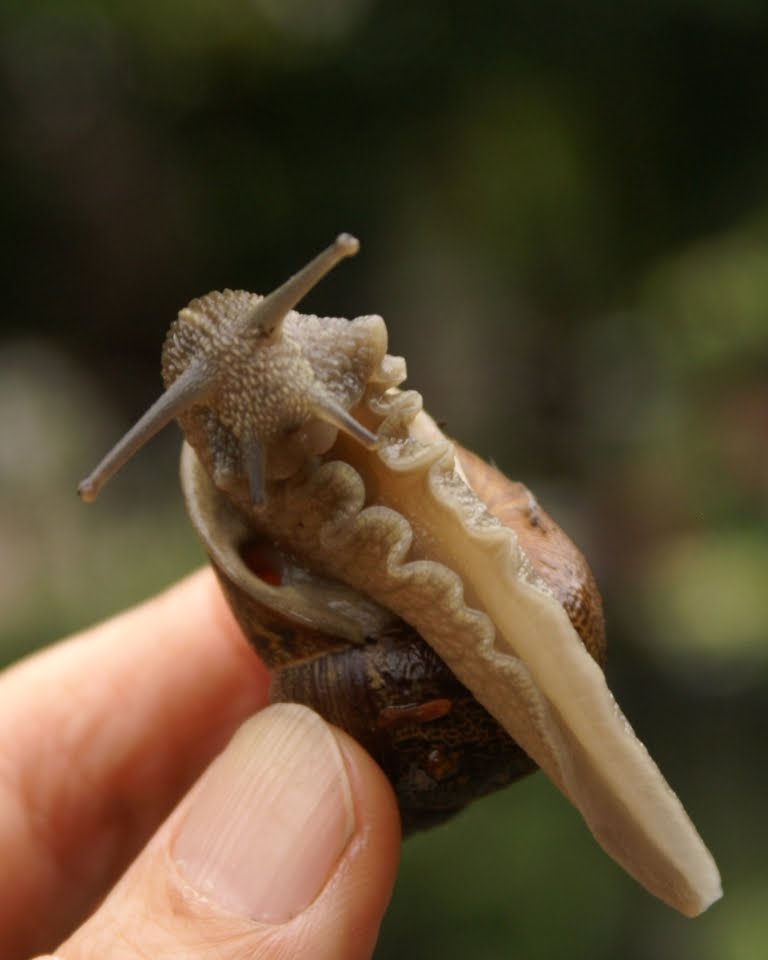
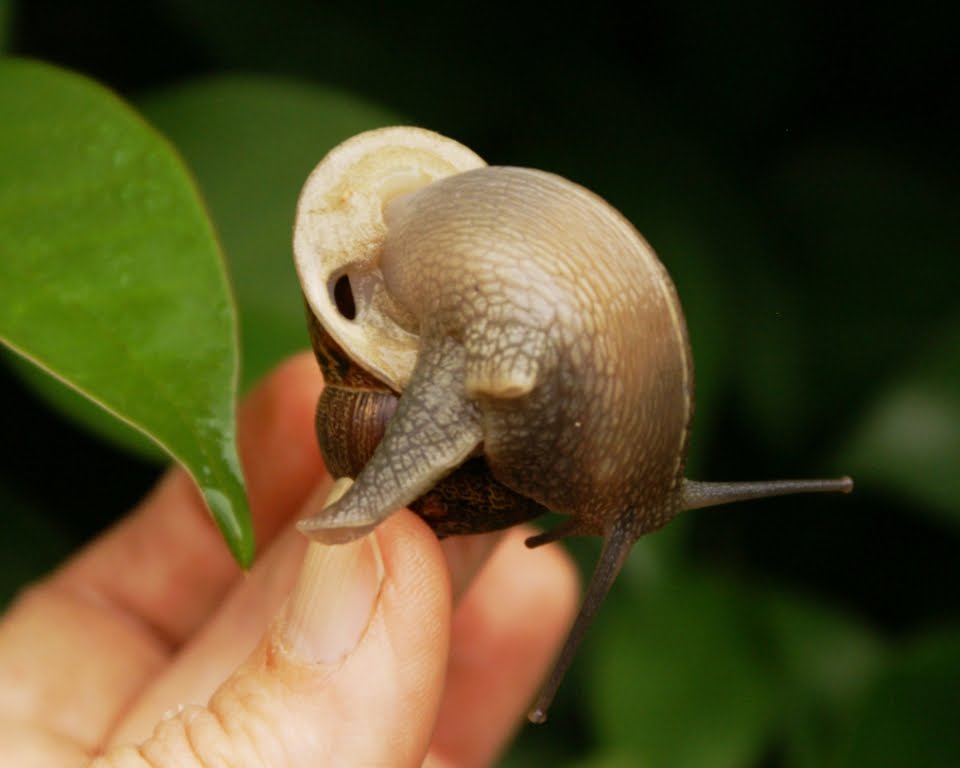
There usually aren't any snails in the back garden, so I was a bit surprised to find this particularly large and attractive helix aspersa crossing my path during snail patrol yesterday. I set it on the seat of my mom's old bouncy chair, intending to deal with it (i.e. carry it to the front yard and toss it into the street for the crows to eat) after checking around the rest of the garden.
By the time I got back to it, the snail had moved down the leg of the chair toward the safety of stuff on the ground. I picked it off with some small difficulty; the suction to the smooth chair leg was pretty strong. As I held the creature in
After getting to know it, though, I didn't have the heart to toss this snail to the birds so I let it go in my neighbor's front yard. Sorry, Neighbor! But if I know snails, this one will make it back to my more gastropodically interesting yard, mate (if it already hadn't when I interrupted), and lay eggs under the sedum before the week is done.
Wednesday, May 19, 2010
Mid-May Snail Patrol
A rainy morning in May is not a common thing in these parts, but here I was at 9 am trolling the garden for snails in a light drizzle. Leaves of all sorts of plants were studded with water droplets, the ph
I throw the snails I pick into the street because I'm too much of a weenie to crush them, preferring to let the crows have their way with the succulent little molluscan tidbits.
Saturday, May 15, 2010
Bloom Day May #4: Tagetes
This is the Tagetes lemonii of Dia de Los Muertos fame: it blooms every year spectacularly at turn of the year that straddles Oct/Nov. But it also blooms for May Day, six months later (or earlier, depending on your point of view). Here is a view of its wonderful yellow-ness looking up into the sun from the perspective of this syrphid fly perched on a leaf below the bloom; possibly laying eggs.
Labels:
bloom day,
flies,
plants,
Seasons/Days/Milestones
Bloom Day May #3: Aeonium
I have had this aeonium haworthii in the garden for aeons . . . ha ha. I don't rememb
My plant has grown large, verging on huge, a round ball about 3 feet in diameter. The stems underneath the canopy of foliage are brittle and have aerial roots all up and down them. I cut off part of the top last year, and new rosettes of
The bloom has just begun as you can tell from the numbers of unopened buds. These flowers attract lots of honeybees with their nectar.
There were also a
Making sure to plant plenty of nectar-producing flowers to provide food for these flies will enable them to thrive in your garden and help the ladybirds control your aphids; nectar flowers, it almost goes without saying, are essential for supporting those honeybees, as well.
Labels:
bloom day,
flies,
habitat,
hymenoptera,
plants
Bloom Day May #2: Santolina
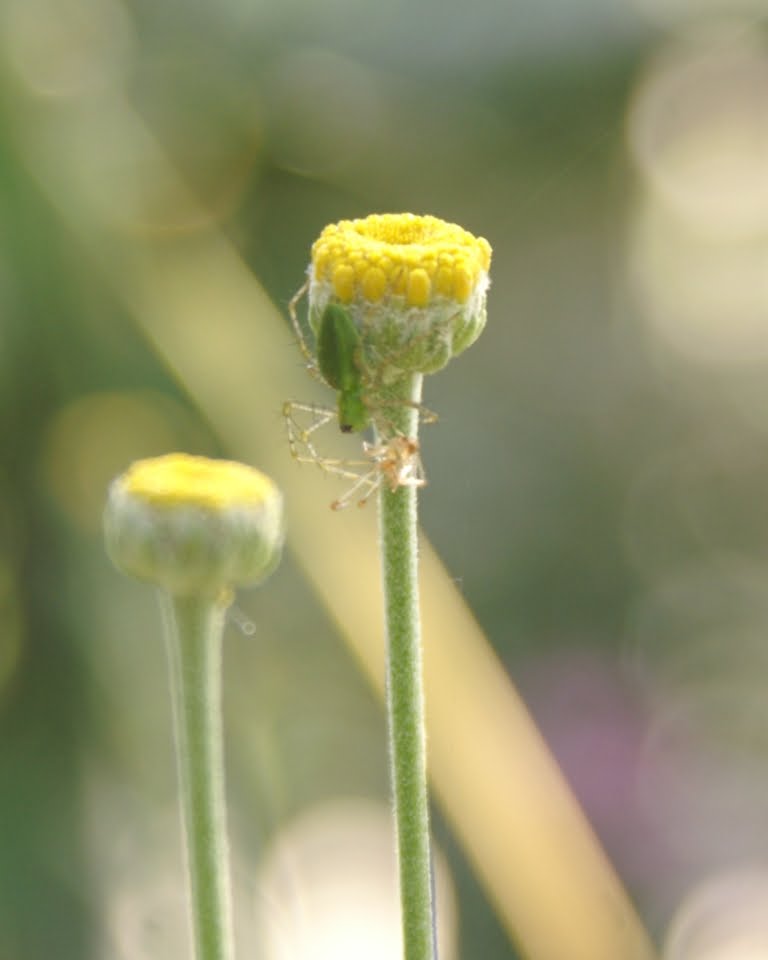
Santolina chamaecyparissus is a mouthful, so let's just call it Lavender cotton. As you can see the flowers are not purple, so I guess the moniker lavender comes from the leaves which are remini
Holy Herb! That's another colorful common name for S. chamaecyparissus but it's also what I exclaimed when I noticed the tiny green lynx spider (Peucetia viridens) with prey of some sort (looks like another tiny spider) right under a flower. Green lynx spiders of all ages and sizes hang out in the tops of flowering shrubs and perennials to exploit (!) the visitors to the flowers. This little one has chosen a plant and flower in scale with its own body size.
Bloom Day May #1: Aloe
This is Aloe homedepotensis; an unnamed variety picked up long ago on the succulent oddity table at the local warehouse store, before such things were all the rage. Of course, succulents aren't only popular now: They seem to have become necessary to demonstrate a gardener's commitment to conservation and begin green.
Anyway, I have a fair
Sure, aloes
Thursday, May 06, 2010
The Joy of Gardening
2010 so far has been an outstanding year for blooming perennials here in southern CA. Since the beginning of the year we've had intermittent periods of helpful rain and cool weather, spliced into periods of abundant sunshine so the dormant perennials got lots of water and not too much heat to hurry them into premature summer senesce
This young greybird grasshopper (Schistocerca nitens) is hanging out on a tickseed flower, Coreopsis lanceolata, one of a whole bouquet of them on this particular plant. For now this nymph (oddly the first one I've noticed this spring) will chomp on a few leaves or petals. Later the ripened seeds will attract finches and other seed-eaters, especially when I forget to fill the Niger feeder.
In the background you can also see erigeron karvinskianus and cistus (I think this is 'Sunset'), just a small sample of the abbondanza of bloom in our parkway. A neighbor boy asked me, as I was puttering around out front, "why do you have so many plants?" I thought a half a sec and answere
Subscribe to:
Comments (Atom)