Search This Blog

Showing posts with label the observer. Show all posts

Wednesday, September 23, 2015

Simple geometry, complex biology


Back in the day, homes were often aligned east/west, north/south I guess.  Being built in 1936, my house is oriented to the east and the equinox sun rising aligns with the driveway.  It's cool, but really just simple geometry in action.  There is a week or so either side of the equinox the sun spends in our driveway, then will move on toward winter.

Meanwhile, spiders have ripened with the autumn and can be found hanging in mid-air, hopefully not by your face.  This orb weaver positioned herself below the acacia cultriformis tree at daybreak.  Insect and arachnid life is adapted to adjust life cycles to the changing seasons, many species becoming sexually mature in late summer and autumn and switching gears from feeding and growing to breeding and dying off, or aggregation and over wintering.

Humans, affected by the changing quality of light, pull out boots and sweaters even though the daytime air temperature still hangs in the high 80s.  We'll begin gathering things and stashing them away for the deep of winter. We light candles, hang wreaths, prepare our homes for the coming dark.  We drink pumpkin ale, celebrating the slightest hint of crispness in the now officially autumn air.

Sunday, August 23, 2015

Rank Amateur says "Nuts"


Nuts.  I failed, I am such an amateur.
Sure, I noticed this beetle suspended in its small way from a pot rim on my porch.

I came down to its level for a closer look and saw it was caught up in spider silk.
And then saw the spider.


Watched the spider approach its comparatively enormous prey from the ventral aspect and
inject venom. Probably between abdominal segments.
The beetle struggled, flexing and spinning for a few seconds then stilled.
I snapped a few photos.


But,
I neglected to count the segments on the beetle's antennae
(looks like 11 in the photos, 11 beadlike segments).
It didn't occur to me to take note of the beetle's tarsal formula:
was it 5-5-5 ( five segments on each of the tarsi fore middle and hind )
or was it 5-5-4?
Or whether there were cleaning combs on the foreleg spurs.

Darkling (tenebrionid) or ground (carabid) ?
Maybe there's some subtle difference in flavor between these two large beetle families, and
I could ask the spider to weigh in here for a positive ID.
Or next time, just be a little more systematic in my observations.


Monday, August 17, 2015

Leucophyllum in Crazy Bloom


Next to the front porch our Texas Ranger, leucophyllum frutescens, is blooming large.
This drought hardy plant needs little water, can survive our average summer without supplemental irrigation, 
but the surprisingly substantial rain we had a month ago seems to have ramped up the flower bud production way beyond normal.  Leucophyllum usually blooms late summer but this year is ridiculous in its bounty.

In Texas, some refer to their state flower as the 'Barometer bush', due to its response to increased humidity and/or summer rain with eye-popping flower production.  Some say the buds often burst open before the rain, serving as a weather prediction.  

Our ranger is covered in blooms right now, I thought because of the soaking it got last month.  But maybe rain's on the way.  Eventually?  Meanwhile, it makes a pleasant bower where it meets up with the Acacia iteaphylla over our front porch entrance.  As they age, the flowers drop off and sprinkle the walk below, and anything else that happens to be there like our concrete fawn.

Bees love it, and many early mornings their loud buzzing greets us as we step under the bower and begin our day.  


Thursday, April 23, 2015

Athanasia acerosa and friends


So my mystery plant is no longer a mystery.
Years ago I found a scraggly one gallon shrub with interesting leaves etc at Daylily Hill Nursery in Escondido (hidden . . . get it?).   The nursery worker really did not know what it was, nor did I, nor could I find anything like it on the internet and even my plant geek nephew couldn't place it.  But I planted it anyway, and imagined it to be akin to the beautiful and bountiful rabbitbrush seen in New Mexico on a summer trip.

The thing has grown well in my parkway, land of little irrigation and not too much rain these past few years.  It's now about 4 feet all around and covered in yellow flowers, and it even has offspring of the cloned persuasion accompanying it further on down the strip.  One time Mr. Cardui and I saw one, a big one about 8 feet tall, also covered in flowers as we drove down a nearby business district avenue.  The thing is, this is a plant that makes itself noticed while in bloom and then, after the flowers fade it goes unnoticed.

Well, I took another trip to Escondido, same nursery under a new name and what do you know?  They had a full block of the mystery plant for sale.   So say a proper hello at last to "Athanasia acerosa" also known as Coulter bush.  Hales from South Africa.  Not a lot of info about it out there, but here's what I've learned:

A bit hard to get started from cuttings, but worth a try.  Not sure what the ultimate size is.  It grows long stems from the base which flower on the ends.  I've had good luck cutting these back halfway or even all the way to the base.  Next year new stems sprout.  Young plants are really leggy, but can be cut back in the same way to get them more bushy and full.  Doesn't need much water. The flowers are sweetly fragrant and they attract a lot of small buggies.


I saw various plant bugs (seriously, miridae),

spittle bugs (Clastoptera lineatocollis), aphids (unidentified very small black ones) and evidence of their wasp parasites (over half were mummified), a ladybird beetle (Asian),


a molting sharpshooter-style leafhopper (likely Homolodisca vitripennis) and where there's prey there's the apex predator of its little golden flowery world:  a mantis nymph (Stagmomantis).


So, one tiny null zone of information has been filled in, a whole tiny world of unanswered or even yet to be imagined questions.


Thursday, March 20, 2014

Notes on Transition through Spring


Hello again.

Found this dead moth in the planter 'neath the mailbox.  It's a white lined sphinx moth, Hyles lineata.    The larval food includes elm; could this moth have grown as a caterpillar way up in the elm canopy over the mailbox and planter of its ultimate resting place?  Or did it feed on the portulaca growing in someone else's yard.

Either way, it's spent adult body is now food for ants.  My last post on this species was almost exactly one year ago; I guess that means something.


Dried tulips from a funeral bouquet rest atop my rust-colored metal mesh table.  I didn't know tulips would hold like this, but must have suspected or dreamed they would hence: my attempt to dry them.


The putative rabbitbrush showed its first bud today or yesterday; I don't know since I've been kind of busy.  Anyway, soon it will be covered in bright yellow heads of flowers like last year and the year before that etc.  We had fair to middling success propagating this plant and so there are now more of them populating the parkway strip in the hopes of transforming it into New Mexico.


Notice one winged aphid there among the juicy grey leaves:  harbinger of infestation or forerunner of ladybirds?
Just one crane fly I've rustled from the underbrush this spring?  What the heck, it must be dry out.


I was remarking to the offspring very recently about how mourning doves have not been frequenting our estate in recent years.  So, this morning what do I hear but the squeaky wings of one dove landing atop our canopy.  Maybe a pair will decide it's safe to nest in the yard again.  Or maybe the damned unleashed and uncontrollable bird killing neighbor cats will keep them at bay.


Pelargonium carnosum blooms.  Enough said in a small way.


Wisteria blooms.  Enough said in a very large way.  In fact the neighbors wisteria is threatening to take over our middle-ground and we must retort with sharpened clippers.


I noticed a monarch caterpillar feeding in the milkweed a few days ago.  This morning as I passed by it was no longer feeding so my eyes began searching the nearby shrubbery and found it in the last stages of its final molt to pupa as the sun's path was approaching equinox.  Significant? or just fortuitous.

This article contains a lively discussion of the seasonal significance of the March equinox.  Bear in mind:  it's British, but peruse the comments for an interesting cross section of opinion, misinformation and surprisingly relevant insights into the annual occurrence.  Some folk still paying attention to celestial geometry.


Thursday, November 28, 2013

Thank You Everything

So it's Thanksgiving Day, and as much as I like eating turkey in general, I made no plans to slave in the kitchen cooking a feast.  Got some taters to mash and a pre-cooked turkey breast, add salad, voila:  thanks very much for the easy dinner.  And no, I have no plans to queue up for shopping tonight.

I did get up early though:  needed to start soaking birch twigs . . . more on this later.  Took our usual walk this morning:  just another typical glorious southern CA fall day.  Found a gob of toyon berries, red grape leaves along the trail and brought them home for decorations.  Pit stop at the coffee shop along the way for a bite: thanks for being open!

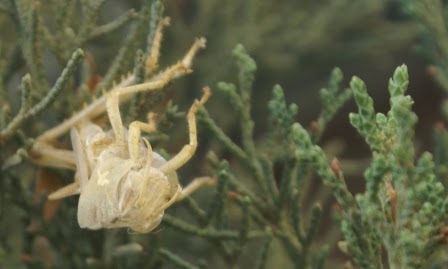
Met up with the munchkin for wreath making (involving the now very flexible birch twigs) and a chat.  I kept wandering around the garden and bringing clippings of dried things, berries, etc to add to it, including a super attractive grasshopper exuvia but my daughter is more of a minimalist and wisely chose only some of my offerings and so her wreath turned out really nice.


Shot the breeze with the neighbors.  Mr Cardui washed the daughter's car, then cleared up the headlight lenses with that stuff you see on TV.  Really works!  He then had a go at the neighbor's car's lights and it was amazing.  Everyone was suitably impressed.

Did a bit of work (you know, that stuff we do for money?) which involved driving on the delightfully lightly trafficked freeways.  Day continues to be outstanding, weather-wise.

Listened to music, including the CD my son's band made back in 1998.  Emailed the family. Lit a fire in the woodstove, ate the turkey and taters, and watched (again) Avatar.  We saw this in the theater when it first came out around Christmas, and I guess that reminded us of Thanksgiving.

Couldn't wish for a better day.


Friday, November 22, 2013

Two Months Before the Desk

The best month of the year has passed by and then some without a word from me here.  It was a glorious October, by the way, full of golden sunlight and tagetes.  Stuck here locked in blogger's block--No!--I've been working on other things but my thoughts and feet always wander back to the bugs and plants.

Stapelia blooms in late autumn and did again this October.  I caught a nice group of green bottle flies   on this fully open blossom.  Bugguide uses the name Lucilia sericata for this species, while "Phaenicia sericata" rolls off the tongue of Hodgkins on Bones ("phaenicia sericata.  early stage of colonization. no eggs or maggots present. Oh look! one of them is dead") with charming regularity.  Not sure which is most correct or if there is a difference.  Nevertheless, yes there IS a dead one there on the flower.

Stapelia puts out a stink very much like that of rotting flesh, attracting flies to the flowers where they can't help themselves from laying copious amounts of eggs.  The eggs hatch and the maggots are doomed.  Yay.  Natural pest control for your estate, just position the plants far from outdoor eating areas.


The flower buds are pretty in a pinkish bloated sort of way, and the open flowers are covered with fine hairs which enhance the visual similarity to rotting moldy flesh.  The flies of course are the pollinators for this plant (Stapelia gigantea) and its related carrion plant species, which are members of the milkweed family.

I have an interesting story about flies and milkweed, but not now.  Suffice it to say that green bottle flies also frequent milkweed to their doom.  Bwa ha ha.

Saturday, July 06, 2013

Giant


When I shop for paper towels at Smart and Final I'm always amused by the descriptive language used to indicate the roll size.  Giant, in paper towel parlance, is apparently only sort of big.  Giant is greater in size than regular but much smaller than Mega or Huge.

In the world of swallowtail butterflies that frequent my Tustin garden, however, the Giant moniker does count for something.  Giant swallowtails (Papilio cresphontes) are noted as having wingspans 83mm up to 140mm.  While the low end is smaller than the western tiger swallowtail, the top end blows both the tiger and anise swallowtail away.

These large butterflies rarely hold still enough for a photo, as mentioned before in these posts.  This time I was allowed to get quite close for a nice fluttery portrait of a nectaring P. cresphontes.

Now, I'm off to check the paper towel inventory.

Friday, May 24, 2013

Searching


I noticed this very young, probably just hatched, katydid exploring its new world on top of an aeonium in the back 40.  And I thought it was cool because


1.  Young katydids have super long antennae for their body size. They send them out into their world, first up then out then down, to try and get a sense of what there is out there. This guy is so small, yet goes forth anyway with nothing but its hunger, instinct, and what its antennae tell it.


2.  This particular aeonium is also small, for an aeonium. I had it for a long time in a small pot.  Every summer it would roll its leaves into little balls at the end of the stems and turn red.  One year I thought it was dying so I planted it in the garden.  It grew some but it's still small.  And it still curls up and turns red in the dry and heat of summer. So I guess that's its nature after all. Of course right now, before the dead of summer, it looks great covered in yellow blooms.


3.  Searching on the internet has become more frustrating.  Really, Alibaba, do you have katydids to sell me?  Do you have small ball-tipped aeoniums as well? I'm about to give up, throw up my hands and go purchase something, anything because after all that's all we users are supposed to do.


4.  But then, Eureka! My search persistence pays off and I find the aeonium I'm seeking--A. spathulatum--at Annie's Annuals.  Well, Annie doesn't have it for sale but the website had a story about "indestructibles" and how someone that works there found this aeonium on the trash heap and discovered its rolling up in a ball characteristic, etc. and I said AHA.


So as my young orthopteran friend discovers its world out there, I have discovered another bit of info about my world out there in here.

It could be hard to ID this young katydid except for the bands of white on the antennae and the kinds of katydids we have here on the estate. Yes we've seen a few new ones in recent years, but those guys do not have the white banded antennae so this must be fork-tailed bush katydid, Scudderia furcata.